September 16, 2026
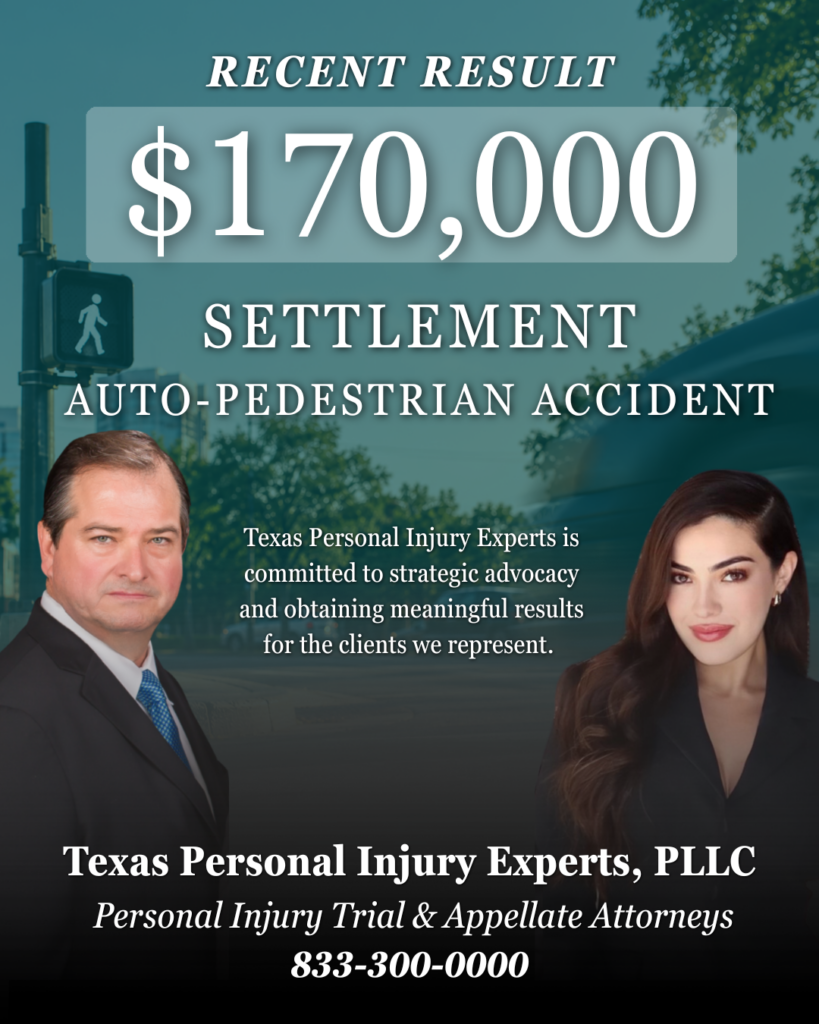
Texas Pedestrian Accident Case Results in $170,000 Settlement

Texas Personal Injury Experts recently obtained a $170,000 settlement for a client injured in an auto-pedestrian accident. While every case is different, the result is an important reminder that a moment on the road can have lasting consequences for a person on foot.
Pedestrian safety is a shared responsibility. Drivers must remain attentive and yield when required. People walking should use designated crossing areas when available and stay alert to changing traffic conditions. Simple decisions can reduce risk and help make Texas roads safer for everyone.
The following guidance focuses on practical steps drivers and pedestrians can take to prevent collisions.
Why Pedestrian Safety Matters on Texas Roads
Pedestrians have no vehicle frame, seat belt or air bag to absorb the force of a collision. A crash that leaves a vehicle occupant unharmed can cause severe injuries to a person walking nearby.
Busy intersections, multilane roads and areas with limited lighting can create added risk. School zones, entertainment districts, shopping centers and neighborhoods may also have frequent pedestrian activity. Drivers should expect people to be present even when a crossing area appears clear at first glance.
Road safety depends on visibility, attention and predictable movement. When drivers reduce distractions and pedestrians cross carefully, both have more time to identify hazards and respond.
Safety Tips for Texas Drivers
The Texas Department of Transportation encourages drivers to stop and yield for pedestrians in crosswalks, yield when turning and remain cautious around stopped vehicles that may block their view. Drivers can also reduce pedestrian risks through consistent habits.
- Slow down when approaching intersections and crosswalks.
- Scan both sides of the road before turning.
- Check for pedestrians before entering or crossing a sidewalk.
- Put away phones and avoid other visual distractions.
- Use extra caution near schools, parks, bus stops and entertainment areas.
- Do not pass a vehicle that has stopped at a crosswalk.
- Allow extra stopping distance in rain or low visibility.
- Look carefully before opening a vehicle door near a sidewalk or bike lane.
Drivers should continue watching the entire crossing area until the pedestrian has safely cleared the vehicle’s path. A person may move more slowly because of age, injury or disability.
Safety Tips for Pedestrians
People walking can take steps to improve visibility and reduce uncertainty for drivers. No safety precaution can prevent every collision, but consistent habits may lower risk.
- Use sidewalks when they are available.
- Cross at intersections or marked crosswalks when possible.
- Follow pedestrian signals and wait for a clear indication to cross.
- Look left, right and left again before entering the roadway.
- Make eye contact with drivers and do not assume a vehicle will stop.
- Stay visible by wearing bright or reflective clothing after dark.
- Avoid looking at a phone while crossing the street.
- Watch for vehicles entering or leaving driveways and parking lots.
When no sidewalk is available, TxDOT advises pedestrians to walk on the left side of the roadway facing oncoming traffic when possible. Local conditions and traffic controls should always be considered.
Higher Risk Locations and Conditions
Some roadway environments require additional attention. A pedestrian may be difficult to see at night, during heavy rain or when parked vehicles obstruct a driver’s view. Wide roads can also leave a person exposed to traffic for a longer period.
Drivers should reduce speed when visibility is limited and anticipate pedestrians near transit stops, campuses, hospitals and event areas. Pedestrians should avoid stepping into the street from between parked vehicles because approaching drivers may not have a clear line of sight.
Both drivers and pedestrians should be especially cautious when a vehicle is turning. A driver may be watching for oncoming traffic while a pedestrian is entering the crosswalk from the opposite direction.
What To Do After a Pedestrian Collision
Even with careful habits, collisions can still occur. The first priority after an accident is safety and medical care.
- Call 911 and request medical assistance when needed.
- Move away from active traffic if it is safe to do so.
- Report the collision to law enforcement.
- Photograph the scene and traffic controls if your condition allows.
- Collect contact information from the driver and any witnesses.
- Seek medical evaluation and follow professional recommendations.
- Keep accident records, medical documents and related receipts.
A person with serious injuries should not attempt to gather evidence at the scene. A family member or attorney may be able to help preserve information later.
A Recent Result and a Continuing Safety Reminder
The $170,000 settlement obtained by Texas Personal Injury Experts reflects one client’s individual circumstances. It does not predict the value or outcome of another claim.
The broader message is that pedestrian collisions can create significant physical and financial consequences. Attention behind the wheel and caution while walking can help prevent a routine trip from becoming a life-changing event.
Speak With a Texas Pedestrian Accident Attorney
If you or a loved one was struck by a vehicle, Texas Personal Injury Experts can review the circumstances and explain your legal options. Contact the firm at 833-300-0000 or visit texaspersonalinjuryexperts.com to request a consultation.
This article is for general informational purposes only and does not constitute legal advice. Reading this article or contacting the firm does not create an attorney-client relationship. This is an attorney advertisement. Past results do not guarantee future outcomes.
Authoritative Sources
Texas Department of Transportation Pedestrian Safety
Texas Department of Transportation Laws and Regulations