September 14, 2026
What to Do After a Car Accident in Texas: Steps That Can Help Protect Your Claim

A car accident can happen in seconds, but the information you gather and the decisions you make afterward may become important weeks or even months later.
Immediately following a collision, it can be difficult to know what information you should collect, what documents you should keep, or what you should avoid doing. Even details that seem insignificant at the time may become relevant when an insurance company evaluates what happened and the injuries or damages involved.
At Texas Personal Injury Experts, PLLC, we help individuals injured in Texas car accidents understand their options and navigate the personal injury claim process. Here are several things we wish more people knew before they ever found themselves dealing with a collision.
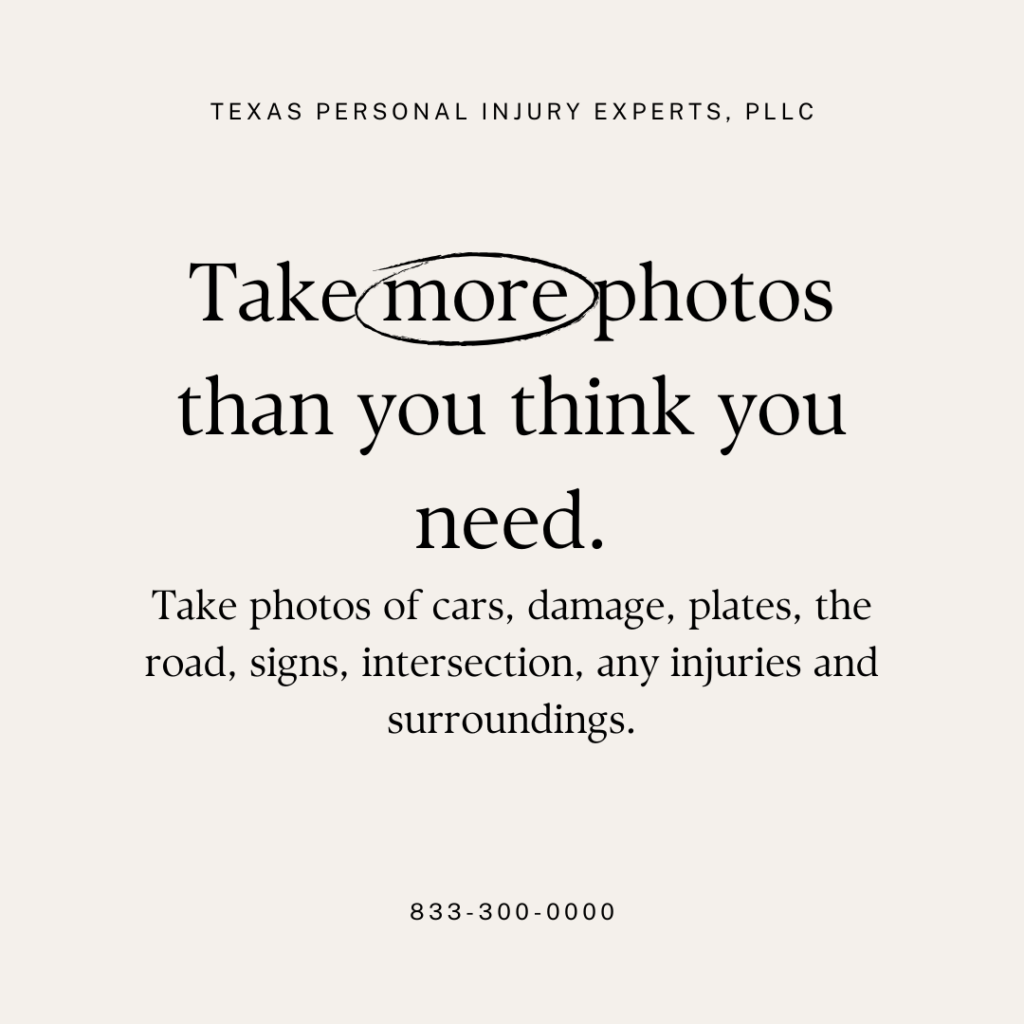
1. Take More Photos Than You Think You Need
If you can safely do so, document the accident scene before vehicles are moved or conditions change.
Do not limit your photos to one or two pictures of the vehicle damage. Consider photographing:
- All vehicles involved from multiple angles
- Areas of visible vehicle damage
- License plates
- The roadway and surrounding area
- Traffic lights and stop signs
- Lane markings
- The intersection or location of the collision
- Skid marks or debris
- Weather and road conditions
- Visible injuries
Photos can help preserve details about the accident scene that may no longer be available later.
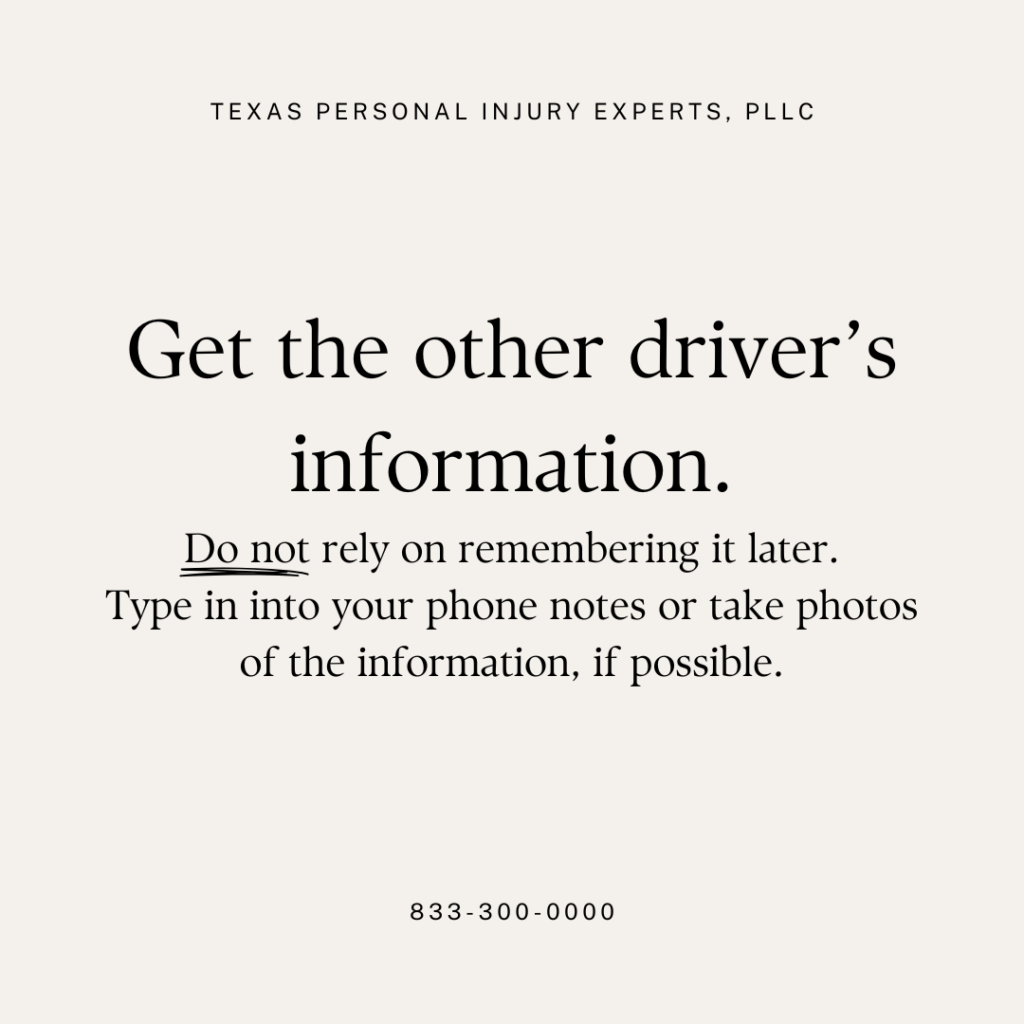
2. Collect the Other Driver’s Information
Do not rely on remembering or obtaining the information later.
When appropriate, collect or photograph the other driver’s identifying and insurance information. This may include their name, contact information, driver’s license, license plate, insurance carrier, and policy information.
If law enforcement responds to the collision, also make note of the responding agency and any information provided about obtaining the crash report.
Keeping this information together can make it easier to identify the parties and insurance companies involved when the claim process begins.
3. Get Contact Information From Witnesses
If someone witnessed the accident, try to obtain their name and contact information before they leave the scene.
An independent witness may be able to provide information about how the collision occurred, what the vehicles were doing immediately beforehand, or what happened afterward.
Even if it seems obvious who caused the accident at the time, circumstances can change once insurance companies begin investigating the claim.
4. Write Down What Happened While It Is Fresh
You may think you will remember every detail of a serious accident. As time passes, however, small details can become harder to recall.
As soon as you reasonably can, write down what you remember.
Consider documenting the direction each vehicle was traveling, where the collision occurred, what you observed immediately beforehand, statements made at the scene, whether an ambulance responded, when police arrived, and anything unusual you noticed.
You can also create a timeline in your phone’s notes so the information is recorded while it is still fresh.
5. Keep Accident-Related Documents and Records
A car accident can quickly generate a significant amount of paperwork.
Instead of deciding what is or is not important, consider keeping accident-related documentation together, including:
- Medical bills and records
- Receipts
- Prescription information
- Insurance correspondence
- Emails
- Repair estimates
- Towing documents
- Rental vehicle records
- Police or crash-report information
- Photographs and videos
- Documents related to missed work
Creating a dedicated physical folder or digital folder can make it easier to locate this information later.
6. Pay Attention to How You Feel After the Accident
Not every injury or symptom is immediately noticeable following a collision.
The adrenaline and stress associated with an accident can make it difficult to assess how you feel at the scene. Symptoms may also become more noticeable in the hours or days that follow.
Pay attention to changes in how you feel after the collision. If you are experiencing symptoms or believe you may have been injured, consider seeking appropriate medical attention rather than assuming that feeling relatively normal immediately afterward means nothing is wrong.
7. Be Careful About What You Post on Social Media
Social media does not necessarily exist in a vacuum once there is an insurance claim or personal injury case.
Posts, photographs, videos, comments, and other online activity may potentially become relevant to an insurance company’s evaluation of a claim.
Something posted without any connection to the accident could also be viewed without its original context.
For that reason, individuals pursuing a personal injury claim should be thoughtful about what they choose to share publicly while the matter is pending.
What Happens After a Texas Car Accident?
After the immediate aftermath of an accident, the process may involve reporting the collision to the appropriate insurance companies, investigating liability, obtaining medical treatment when necessary, documenting injuries and damages, collecting records and bills, communicating with insurance adjusters, and evaluating potential compensation.
Every accident is different. The appropriate next steps can depend on factors such as how the collision happened, the insurance coverage available, the severity of the injuries, and the parties involved.
Commercial vehicle accidents, rideshare collisions, accidents involving multiple vehicles, pedestrian accidents, and collisions involving serious injuries can present additional issues.
Do You Have to Handle the Insurance Claim Alone?
No. If you were injured because of another person’s negligence, you can speak with a personal injury attorney about your situation and your legal options.
Insurance claims can involve questions about fault, medical treatment, insurance coverage, damages, documentation, and settlement. Understanding the process can help you make informed decisions about your claim.
Speak With a Texas Car Accident Attorney
If you or a loved one has been injured in a car accident, Texas Personal Injury Experts, PLLC can help you understand your options and what may come next.
Our firm represents individuals injured in car accidents and other personal injury matters throughout Texas.
Call 833-300-0000 to schedule a free consultation.
This is an attorney advertisement. Prior results do not guarantee a similar outcome.